
Book a call

AI doesn’t decide. We do.

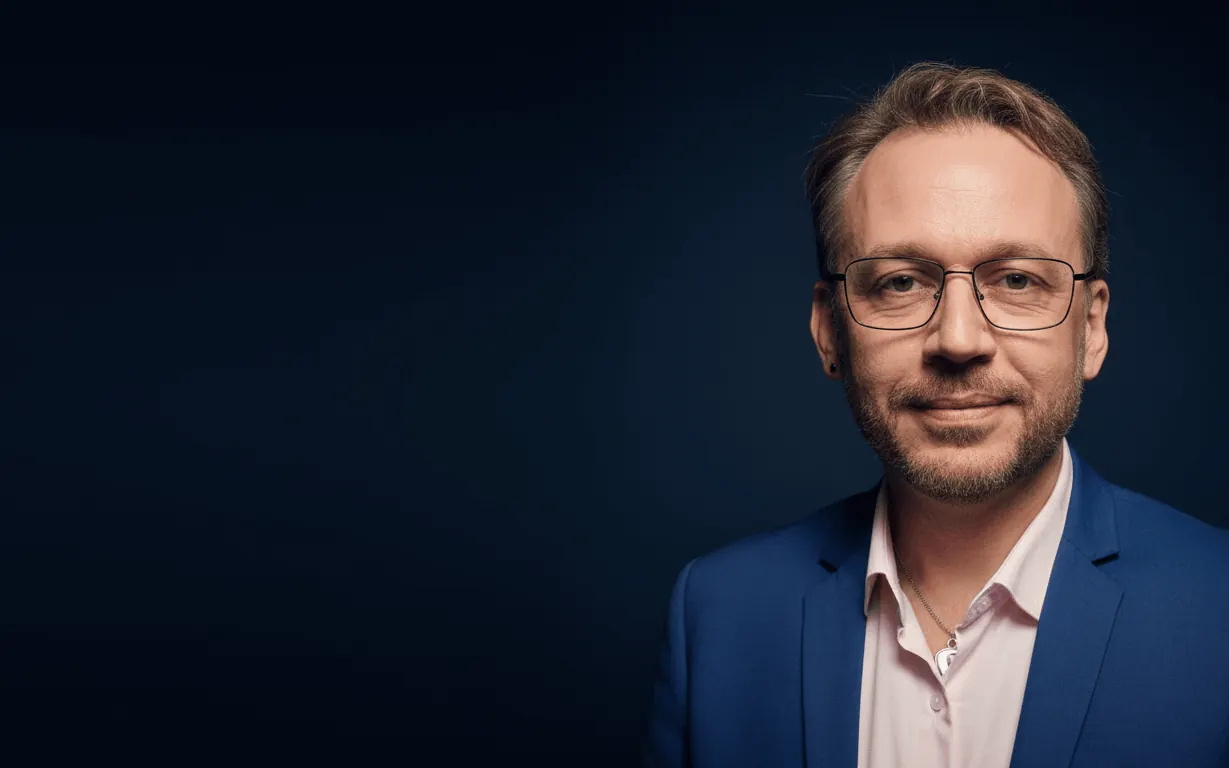
Jean-Michel LAVEISSIÈRE, facing the camera

Jean-Michel LAVEISSIÈRE

Speaker and author.

  • Decision-making
  • Innovation
  • Transformation
  • Teaching

The real issue isn’t AI. It’s what we decide to do with it.

It all depends on how we take it up, why we roll it out, the effects we refuse to see and the limits we don’t dare to set. When it all plays out without the teams, it’s people we sacrifice. And any use left to itself always drifts.

“AI transforms.” “AI decides.” “AI replaces.” Behind these lines we hear everywhere, it is women and men who decide.

I was one of them.

We can decide to help our teams grow, or to replace them with AI

When the decision is made with the teams, we hand the machine what it does best, and everyone keeps the part of their job that no job description captures.

Strengthening takes longer than replacing, and shows less quickly. Yet it’s what leaves an organization stronger than before.

Replacement is not inevitable. It’s a human choice dressed up as progress.

I talk about it on the stage of a company event, before an executive committee or the entire workforce, and at greater length in my book and in my newsletter.

My signature talk The Replacement Trap

You walk in wondering what AI will do. You walk out wondering what you’ll decide to do with it.

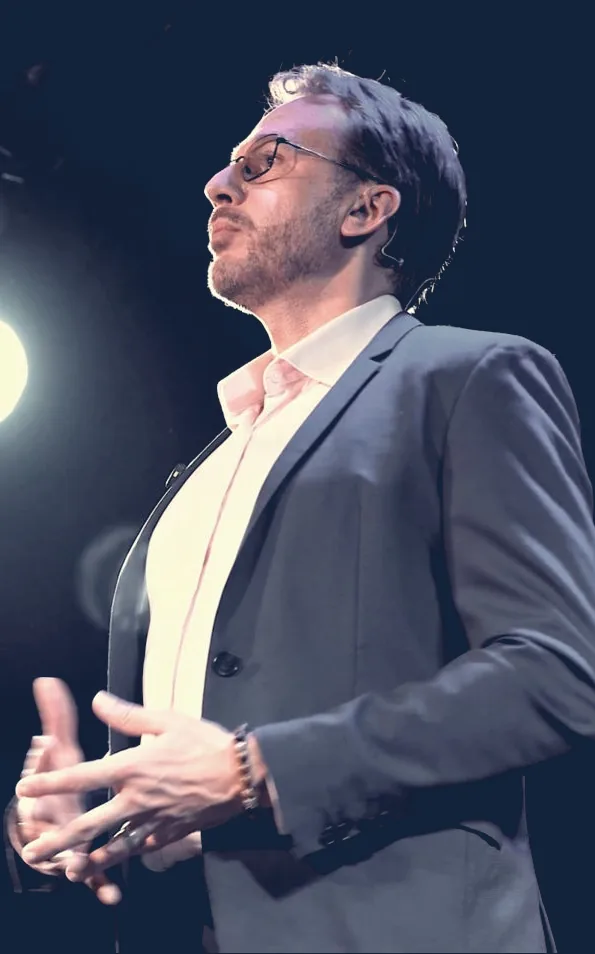
Jean-Michel LAVEISSIÈRE on stage, close-up, hands clasped
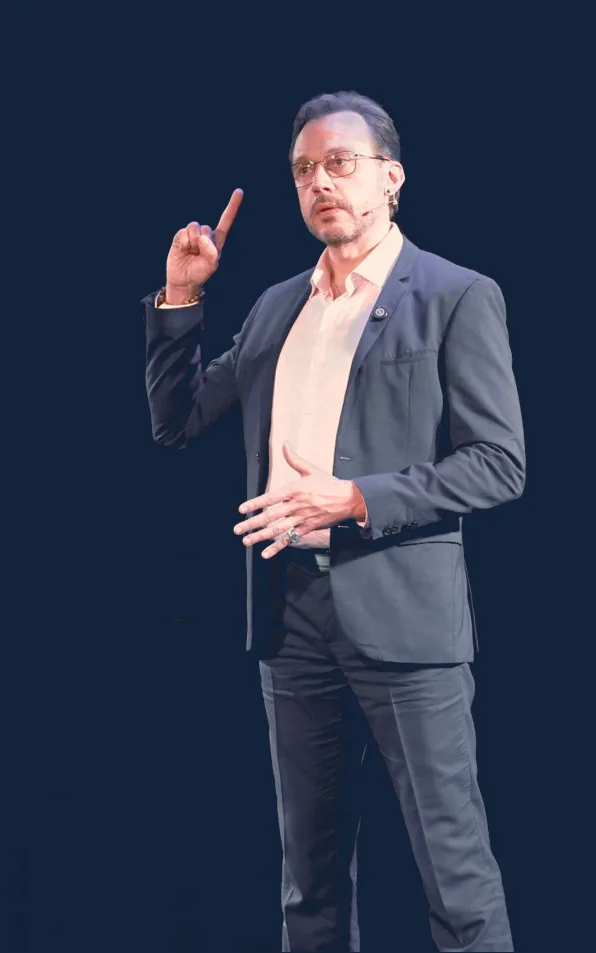
On stage, index finger raised to make a point
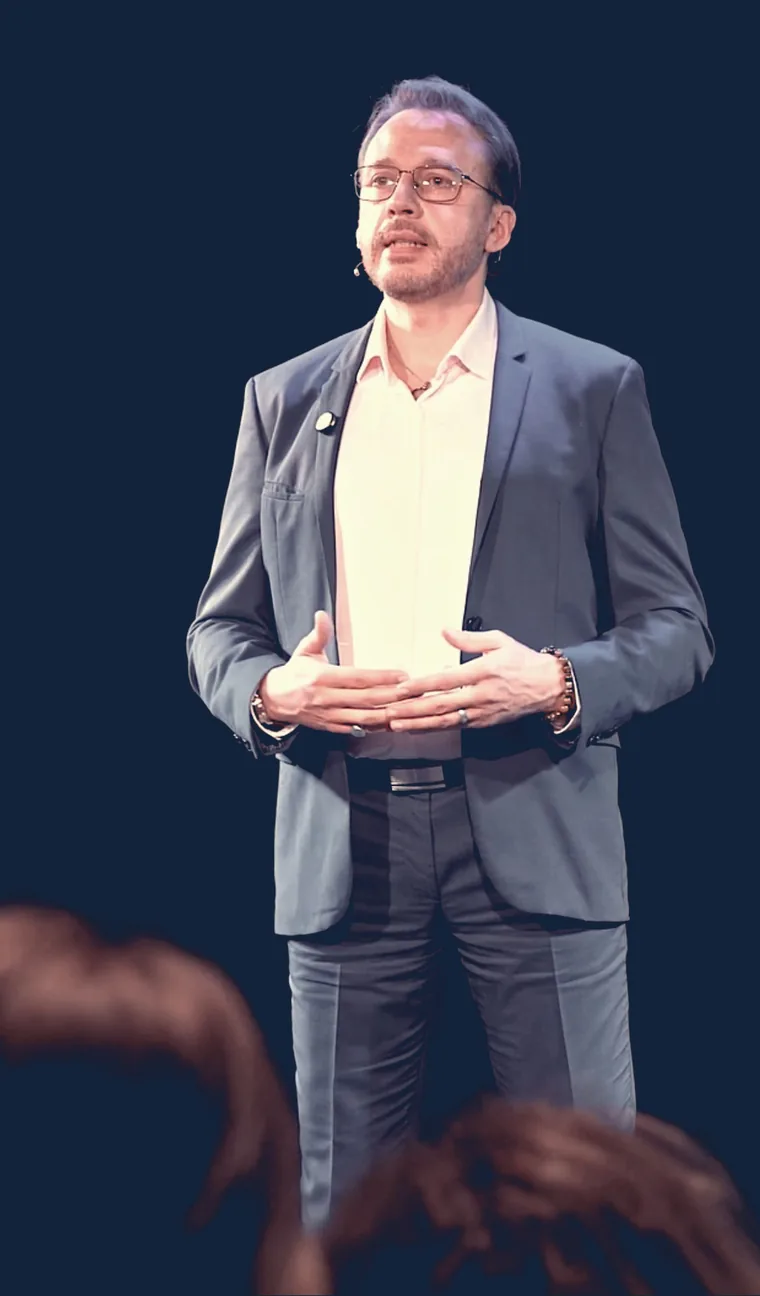
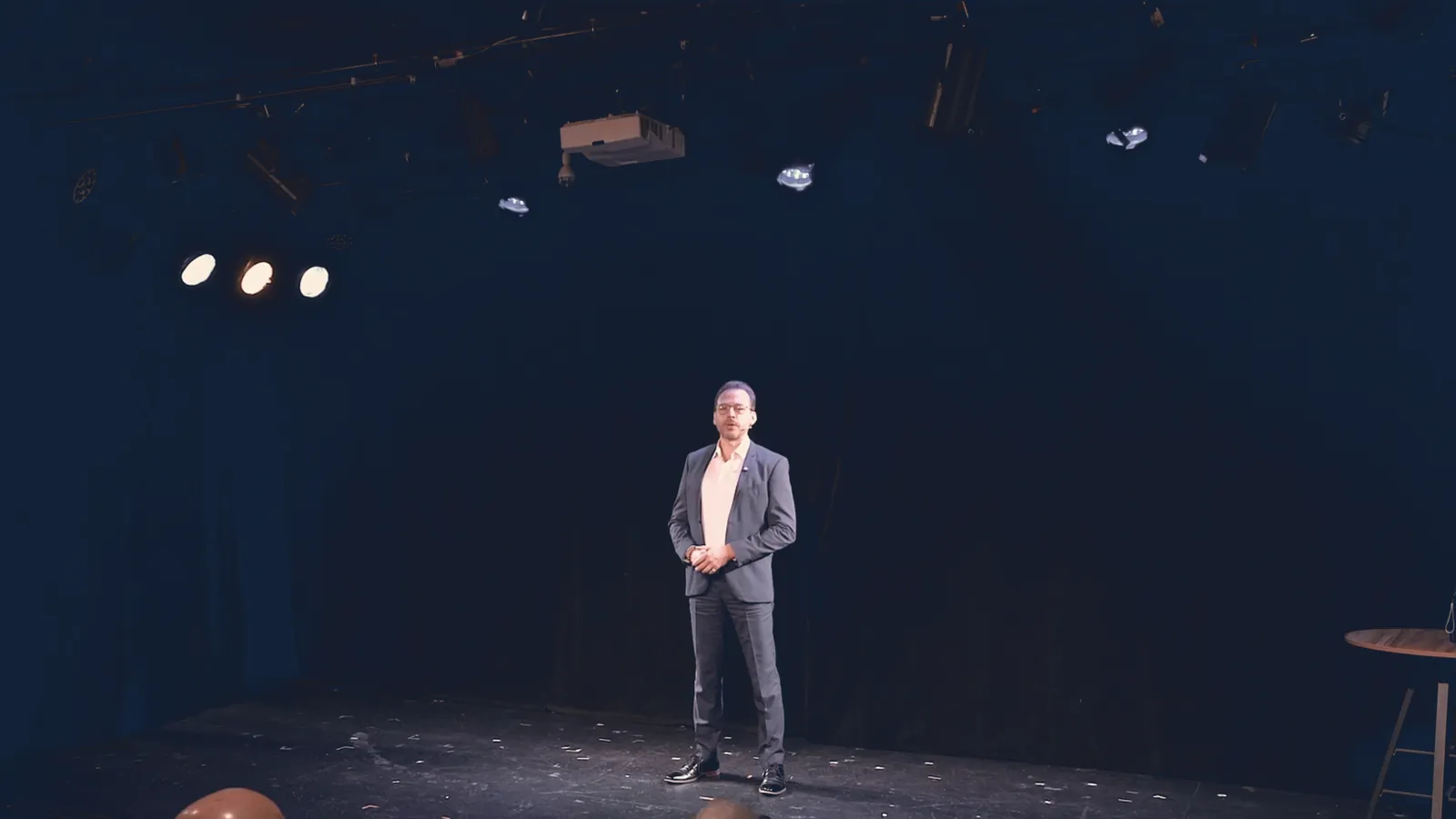
On stage, facing the audience
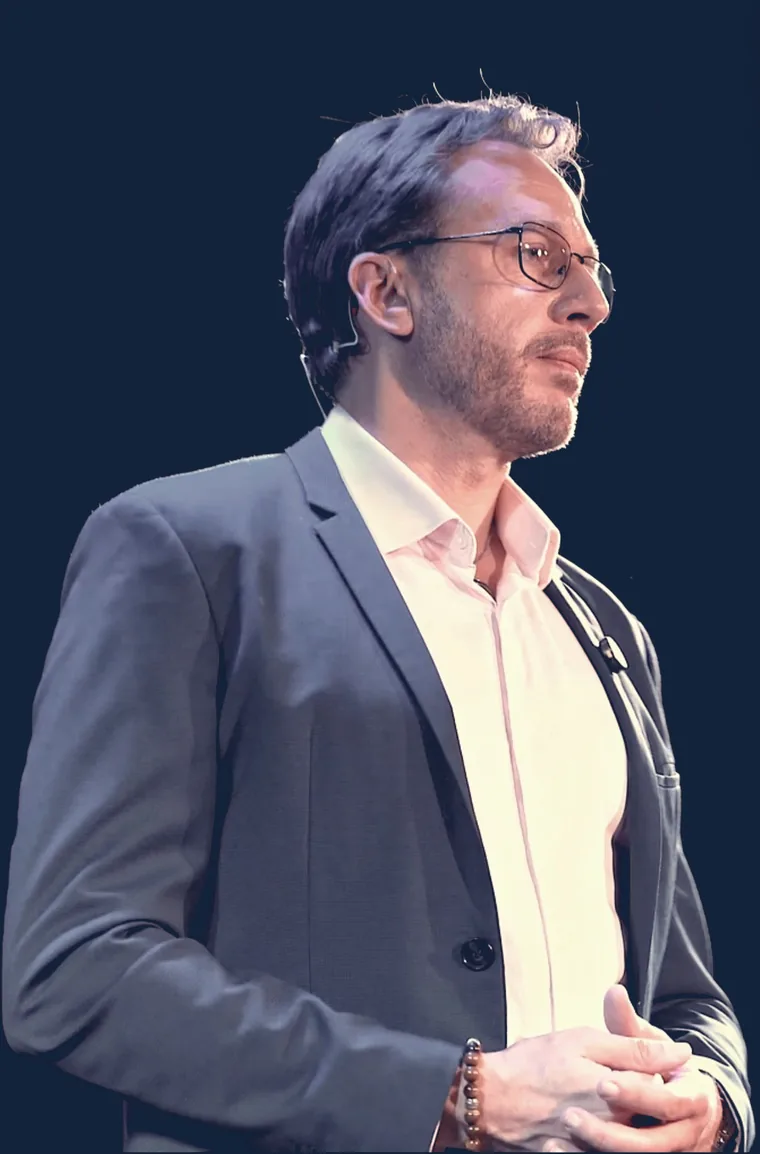
On stage, in profile under the lights
Talk
12 or 45 minutes
Session
20 minutes or 1 hour
Where
In person or online
Also
Panels, workshops…

For executives, it shows what their decisions on AI commit them to beyond the advertised gains, and how to make sure no one decides in their place.

For managers, it gives them the words and the legitimacy to say what they see, before their role is reduced to signing off.

For teams, it names their fears instead of brushing them aside, and reminds them they have a say.

I give my talks in French. I bring the same conviction to schools, for students from middle school to university and for their families, in a format suited to them.

Two clips from the talk

The angle and tone of my signature talk, from its 12-minute version. The second is for executives, built around the case of one of them. Both are in French.

Play clip 1On YouTube

The trap Replacing people and calling it progress

Illustration: an executive checks his phone while, around the table, his team members disintegrate.

Today, the urgency to “do AI” is pushing many executives to move too fast. The pressure is high, the fear of “being left behind” runs deep, and the promise is tempting: better, faster, cheaper.

Everything is in place to give in to the temptation to replace people, and to present it as progress. Augmentation is what gets announced. Substitution is what gets deployed, one job at a time, without anyone having to answer for it.

The trap is that the bill comes due later, paid in know-how, in trust, and in customers. And that the same logic eventually works its way up to those who applied it.

This trap is defused before you sign.

That’s where I come in.

I’ve seen a technology’s promise backfire before

Illustration: a young man on his couch, phone and tablet in hand, the TV on in front of him.

In the early 2000s, I founded the first streaming operator in France and rolled out the country’s first video platforms, long before YouTube, and years before Netflix began streaming.

I was convinced I was giving people back their time and freeing them from TV schedules, free to watch what they wanted, when they wanted, wherever they wanted. I was young, idealistic and pretty naive.

After a few years, the promise turned against us. What was meant to save us time consumed more of it. What was meant to give us choice ended up steered by algorithms. And comfort turned into dependence, the freedom we were promised into lock-in.

I see the same scenario playing out again with AI, faster and on a larger scale. This time, I’ve decided not to stay silent.

A technology is neither good nor bad in itself. But without awareness and without limits, it ends up taking back what it came to offer us.

Jean-Michel LAVEISSIÈRE

SENSÉ® the antidote to the replacement trap

Sensé is French for “sensible.” Each letter is the initial of a French word, and each word comes with a question.

  1. Sens purpose

    Why, for whom, and what are we unwilling to lose along the way?

  2. Effets effects

    What will the project produce beyond what an Excel spreadsheet shows?

  3. Nouveaux usages new ways of working

    On the ground, what gets better, and what gets worse?

  4. Synergie working alongside AI

    Do the people working with AI still make decisions, or are they supervising what used to be their job?

  5. Évolution change over time

    Six months later, what has it become, in the eyes of the people living it?

Five questions anyone can ask the very next day.

Whoever refuses to answer them has already answered.

Three worlds I’ve passed through, the same blind spots

  • Tech entrepreneurship

    Where we celebrate what a technology will earn, without asking what it will cost.

  • Advising executive teams and investors

    Where we promise to work better together, without asking why we weren’t doing it already.

  • Private higher education

    Where we push young people toward AI more than we teach them to doubt.

In all three, purpose, consequences and limits were missing.

Jean-Michel LAVEISSIÈRE, three-quarter view

Thirty years in tech

I spent thirty years in tech, from the arrival of the internet to that of generative AI. I founded companies and acquired others. I raised capital and opened subsidiaries abroad. Then I helped companies through their transformations, advised investment funds, and shaped innovation strategies. In French higher education, I led data and AI programs, designed their curricula, and registered the state-recognized qualifications they lead to.

In October 2025, I changed direction, to give shape to what experience had taught me.

And AI? I use it every day.

  • Scout

    Sees what keeps repeating.

  • Practitioner

    Knows what it costs.

  • Builder

    Builds for the long term.

A book coming in early 2027

A book of conviction on what AI reveals about our decisions. For those who make them, and for those who live with their effects.

Scenes witnessed from the inside, from the executive committee to the team meeting, and public cases making clear that none of this is isolated. It traces how a choice ends up looking inevitable, and what each of us, wherever we sit, can still decide.

At an event, every participant can leave with the book, signed after my talk, or even personalized with a note from their company.

My newsletter

A long read that traces a decision back, starting from what gets said in meetings, and what doesn’t. To say in full what I can only say in part on stage or on video. And the book announcement, when the day comes. Written in French for now.

Subscribe on Substack

My newsletter is published on Substack: that’s where you subscribe, and where you can unsubscribe in one click.

Who will be in the room?

A company-wide event, a leadership offsite, a conference, the start of a school year. Tell me who you’re bringing together, and what you want the room to walk away with.